

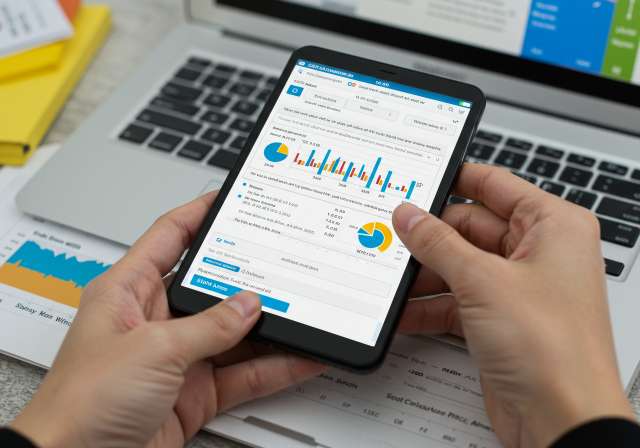
Want to invest in the Indian stock market? Learn how open demat account easily! Our guide simplifies the process, from choosing a broker to KYC verification. St
Want to invest in the Indian stock market? Learn how open demat account easily! Our guide simplifies the process, from choosing a broker to KYC verification. Start your investment journey now!
Unlock Investments: How to Open Demat Account in India
Understanding the Demat Account: Your Gateway to the Indian Markets
In today’s dynamic financial landscape, investing in the stock market has become increasingly accessible to the common Indian investor. At the heart of this accessibility lies the Demat account. But what exactly is a Demat account, and why is it so crucial for navigating the Indian financial markets?
A Demat account, short for Dematerialization account, is essentially an electronic repository for your shares and securities. Think of it as a bank account, but instead of holding money, it holds your investments in digital form. Before the advent of Demat accounts, share certificates were physical documents, leading to issues of forgery, loss, and cumbersome transfer processes.
The introduction of Demat accounts revolutionized the Indian stock market. It eliminated the need for physical share certificates, making trading faster, safer, and more efficient. This transformation was spearheaded by the National Securities Depository Limited (NSDL) and the Central Depository Services (India) Limited (CDSL), the two depositories in India responsible for holding and managing Demat accounts.
Having a Demat account is now mandatory for trading in equity shares, bonds, mutual funds, and other securities listed on the Bombay Stock Exchange (BSE) and the National Stock Exchange (NSE). It simplifies the entire investment process, allowing you to buy, sell, and hold securities electronically.
Why You Need a Demat Account to Invest in India
The benefits of having a Demat account extend far beyond mere convenience. Here’s why it’s essential for any Indian investor:
- Elimination of Physical Certificates: Say goodbye to the risks associated with lost, stolen, or damaged physical share certificates.
- Faster Transactions: Trading becomes significantly faster and more efficient, with seamless transfer of shares directly to and from your Demat account.
- Reduced Risk of Forgery: The electronic format eliminates the possibility of forged or counterfeit certificates.
- Easy Accessibility: You can access your Demat account and manage your investments from anywhere with an internet connection.
- Convenient Holding of Multiple Asset Classes: A single Demat account can hold a variety of investments, including equity shares, bonds, mutual funds, and Exchange Traded Funds (ETFs).
- Automatic Updates: Corporate actions like bonus issues, stock splits, and dividends are automatically credited to your Demat account.
Choosing the Right Depository Participant (DP)
While NSDL and CDSL are the central depositories, you don’t directly open a Demat account with them. Instead, you need to open an account through a Depository Participant (DP). DPs are intermediaries, typically banks, brokers, or financial institutions, authorized by SEBI (Securities and Exchange Board of India) to provide Demat account services.
Choosing the right DP is crucial, as they will be your primary point of contact for all your Demat account related needs. Consider the following factors when selecting a DP:
- Brokerage Charges: Compare the account opening fees, annual maintenance charges (AMC), and transaction fees charged by different DPs.
- Services Offered: Look for a DP that offers a wide range of services, such as online trading platforms, research reports, and personalized investment advice.
- Customer Service: Choose a DP with a reputation for excellent customer service and quick resolution of queries.
- Technology Platform: Ensure that the DP has a user-friendly and reliable online trading platform that meets your needs.
- Reputation and Reliability: Research the DP’s reputation and track record to ensure they are a trustworthy and reliable financial institution.
Step-by-Step Guide: How to Open Demat Account
Opening a Demat account is a relatively straightforward process. Here’s a step-by-step guide to help you navigate the process:
Step 1: Application Form
Obtain an account opening form from your chosen DP. You can usually download the form from their website or collect it from their branch.
Step 2: KYC Documents
You will need to submit Know Your Customer (KYC) documents to verify your identity and address. The following documents are generally accepted:
- Proof of Identity (POI): Aadhaar card, PAN card, Passport, Voter ID, Driving License.
- Proof of Address (POA): Aadhaar card, Passport, Utility Bill (electricity, water, gas), Bank Statement.
- PAN Card: PAN card is mandatory for opening a Demat account in India.
- Passport-sized photograph: Typically one or two recent passport-sized photographs.
Step 3: In-Person Verification (IPV)
SEBI regulations require an In-Person Verification (IPV) of the applicant. This can be done either physically by visiting the DP’s branch or through video conferencing. The purpose of IPV is to verify the authenticity of the documents submitted and to ensure that the applicant is aware of the risks associated with investing in the stock market.
Step 4: Agreement and Terms & Conditions
Carefully read the account opening agreement and understand the terms and conditions, including the fees, charges, and rules governing the operation of your Demat account.
Step 5: Account Activation
Once your application is processed and your documents are verified, your Demat account will be activated. You will receive a unique Demat account number and login credentials to access your account online.
Online vs. Offline Demat Account Opening
You can open a Demat account either online or offline. Both methods have their pros and cons:
Online Demat Account Opening
- Pros:
- Convenient and time-saving
- Often offers lower brokerage charges
- Easy to compare different DPs
- Cons:
- Requires a good internet connection
- May not be suitable for individuals unfamiliar with technology
Offline Demat Account Opening
- Pros:
- Personalized assistance from DP representatives
- Suitable for individuals who prefer face-to-face interaction
- Cons:
- Can be time-consuming
- May involve higher brokerage charges
Demat Account Charges and Fees
Understanding the various charges associated with a Demat account is crucial. Here are some common charges you should be aware of:
- Account Opening Fee: A one-time fee charged when you open a Demat account. Some DPs offer free account opening.
- Annual Maintenance Charges (AMC): An annual fee charged for maintaining your Demat account.
- Transaction Fees: Fees charged for each transaction (buying or selling shares) executed through your Demat account.
- Dematerialization Charges: Fees charged for converting physical share certificates into electronic form.
- Rematerialization Charges: Fees charged for converting electronic shares back into physical form.
- Pledge Charges: Fees charged for pledging your shares as collateral for a loan.
Linking Your Bank Account to Your Demat Account
To seamlessly trade in the stock market, you need to link your bank account to your Demat account. This allows you to transfer funds for buying shares and receive proceeds from selling shares directly into your bank account.
The process of linking your bank account is usually straightforward and involves providing your bank account details (account number, IFSC code) to your DP. The DP will then verify these details with your bank to ensure they are correct.
Investing through SIPs, Mutual Funds, and More
Once you have a Demat account, you can start exploring various investment options available in the Indian market. Here are some popular options:
- Equity Shares: Investing in the shares of publicly listed companies on the BSE and NSE.
- Mutual Funds: Investing in professionally managed funds that pool money from multiple investors to invest in a diversified portfolio of stocks, bonds, or other assets. Popular options include Equity Linked Savings Schemes (ELSS) for tax savings and Systematic Investment Plans (SIPs) for disciplined investing.
- Exchange Traded Funds (ETFs): Similar to mutual funds, but traded on stock exchanges like individual stocks.
- Bonds: Investing in debt instruments issued by governments or corporations.
- Initial Public Offerings (IPOs): Investing in the shares of companies that are listing on the stock exchange for the first time.
- Government Schemes: Exploring options like Public Provident Fund (PPF) and National Pension System (NPS) for long-term savings and retirement planning.
Conclusion: Take Control of Your Financial Future
Opening a Demat account is the first crucial step towards participating in the exciting world of the Indian stock market. By understanding the process and choosing the right DP, you can empower yourself to make informed investment decisions and take control of your financial future. Whether you are interested in direct equity investments, mutual funds, or other investment instruments, a Demat account is your essential gateway to accessing these opportunities. So, take the plunge, and start your investment journey today!
About the Author


