

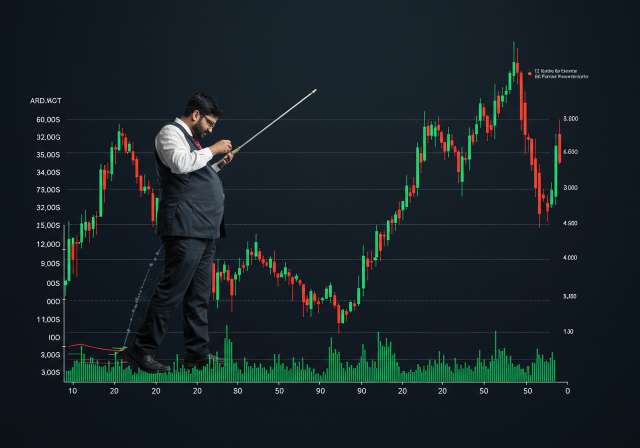
Unlock profit potential with an option analytics tool. Make informed decisions, analyze risk, and strategize effectively in the Indian equity markets. Optimize
Unlock profit potential with an option analytics tool. Make informed decisions, analyze risk, and strategize effectively in the Indian equity markets. Optimize your trading today!
Mastering Options Trading: Unveiling the Power of Data
Introduction: Navigating the Options Market Maze
The Indian options market, traded primarily on the National Stock Exchange (NSE), offers tremendous potential for both seasoned investors and newcomers. However, with its intricate strategies and complex pricing models, it can feel like navigating a dense maze. Understanding the underlying factors that influence option prices is crucial for making informed trading decisions and maximizing returns. This article dives deep into the world of option analytics, exploring how data-driven insights can empower you to trade smarter and more profitably.
For the average retail investor in India, accessing sophisticated analytical tools can seem daunting. Many rely on intuition or generic trading tips, which often lead to suboptimal outcomes. But the truth is, even with limited capital, you can leverage the power of data analysis to gain a competitive edge in the options market. We’ll explore practical strategies and resources available to Indian investors, regardless of their experience level.
Decoding Option Pricing: The Greeks and Implied Volatility
Before we delve into specific tools, it’s essential to understand the key concepts that drive option pricing. These are often referred to as “the Greeks” and include Delta, Gamma, Theta, Vega, and Rho. These metrics quantify the sensitivity of an option’s price to various factors, allowing you to assess risk and potential reward.
- Delta: Measures the change in an option’s price for every ₹1 change in the underlying asset’s price. A delta of 0.50 indicates that the option price will increase by ₹0.50 for every ₹1 increase in the underlying asset’s price.
- Gamma: Measures the rate of change of Delta with respect to changes in the underlying asset’s price. It indicates how stable Delta is. High Gamma means Delta is more volatile.
- Theta: Measures the rate of decay of an option’s value over time. As time passes, the value of an option typically decreases, especially closer to the expiration date.
- Vega: Measures the sensitivity of an option’s price to changes in implied volatility. Higher implied volatility generally leads to higher option prices.
- Rho: Measures the sensitivity of an option’s price to changes in interest rates. This is typically less significant for short-term options.
Another critical concept is Implied Volatility (IV). IV represents the market’s expectation of future volatility in the underlying asset. It’s a key input in option pricing models and significantly influences option premiums. High IV generally means higher option prices, while low IV suggests lower prices. Analyzing IV can help you determine whether options are relatively expensive or cheap.
Identifying Your Trading Goals: The Foundation for Effective Analysis
Before employing any analytical tool, it’s crucial to define your trading objectives. Are you looking to generate income through strategies like covered calls or cash-secured puts? Or are you seeking to profit from directional movements using strategies like long calls or long puts? Your goals will dictate the specific data points and analytical techniques you need to focus on.
For example, if you’re an income-focused investor, you might prioritize strategies with a high probability of success, even if the potential profit is relatively modest. In this case, you’d want to analyze factors like the probability of the option expiring worthless (OTM) and the potential return on investment (ROI). On the other hand, if you’re a directional trader, you’d focus on identifying undervalued or overvalued options based on your market outlook and risk tolerance.
Exploring Available Tools for Indian Options Traders
Several resources are available to Indian investors looking to analyze options data. These range from free online calculators to sophisticated trading platforms with advanced analytical capabilities. The right choice depends on your individual needs and budget.
1. Brokerage Platforms and Their Analytical Features
Many leading brokerage firms in India, such as Zerodha, Upstox, and Angel One, offer built-in option chain analysis tools and charting capabilities. These platforms typically provide real-time data on option prices, the Greeks, and implied volatility. Some platforms also offer features like strategy builders and payoff diagrams, allowing you to visualize the potential profit and loss profile of different option strategies.
These platforms are a great starting point for beginners, as they provide a convenient and cost-effective way to access essential data. However, the analytical capabilities may be limited compared to dedicated option analytics software.
2. Free Online Option Calculators
Numerous free online calculators are available that allow you to calculate theoretical option prices based on various inputs, such as the underlying asset’s price, strike price, time to expiration, and implied volatility. These calculators can be helpful for understanding how different factors affect option pricing and for evaluating the fair value of options.
While free calculators are useful for basic analysis, they often lack advanced features like real-time data feeds and strategy backtesting. They are best suited for educational purposes and quick calculations.
3. Advanced Option Analytics Software
For serious options traders, dedicated option analytics software offers a more comprehensive suite of tools and features. These platforms typically provide real-time data, advanced charting capabilities, strategy backtesting, and sophisticated analytical models. They allow you to screen for specific option criteria, analyze implied volatility skews, and identify potential arbitrage opportunities.
Popular options analytics software packages include optionsXpress (now part of Charles Schwab), OptionVue, and LiveVol. However, these platforms often come with a significant subscription fee.
How to Use an Option Analytics Tool Effectively
Simply having access to data is not enough. You need to know how to interpret the information and use it to make informed trading decisions. Here’s a step-by-step guide to using an option analytics tool effectively:
1. Start with the Option Chain
The option chain is a list of all available options for a particular underlying asset, organized by strike price and expiration date. Analyze the option chain to understand the market’s perception of risk and potential reward. Pay attention to the open interest (OI) and volume, which indicate the level of activity in each option contract. A significant increase in OI at a particular strike price may suggest a strong conviction among traders about the future price of the underlying asset.
2. Analyze Implied Volatility (IV)
Compare the IV of different strike prices to identify potential mispricings. An “IV skew” exists when options with different strike prices have different implied volatilities. This can indicate the market’s expectation of a higher or lower probability of a large price movement in a particular direction. For example, a higher IV for out-of-the-money (OTM) puts compared to OTM calls might suggest that the market is pricing in a higher risk of a downside move.
3. Use the Greeks to Assess Risk
Carefully analyze the Greeks for each option contract to understand its sensitivity to various factors. Delta can help you estimate the potential profit or loss if the underlying asset’s price moves in a particular direction. Theta can help you assess the time decay risk. Vega can help you understand the impact of changes in implied volatility on your position.
4. Backtest Your Strategies
Before implementing any option strategy with real money, it’s crucial to backtest it using historical data. This will help you understand how the strategy would have performed in different market conditions and identify potential weaknesses. Some options analytics platforms offer built-in backtesting tools that allow you to simulate your trades and evaluate their profitability.
5. Monitor Your Positions
Once you’ve entered into an option trade, it’s essential to continuously monitor your positions and adjust them as needed. Keep track of the underlying asset’s price, implied volatility, and the Greeks. Be prepared to close your position if the market moves against you or if your risk tolerance is exceeded.
Options Trading and Risk Management: A Crucial Combination
Options trading involves inherent risks. It’s crucial to implement robust risk management strategies to protect your capital. Never invest more than you can afford to lose, and always use stop-loss orders to limit your potential losses. Consider diversifying your portfolio and using hedging strategies to reduce your overall risk exposure.
Here are some risk management techniques relevant to Indian investors:
- Position Sizing: Determine the appropriate size of your option positions based on your risk tolerance and account size. Avoid overleveraging your account.
- Stop-Loss Orders: Place stop-loss orders to automatically close your position if the price moves against you.
- Hedging Strategies: Use hedging strategies, such as buying protective puts or selling covered calls, to reduce your risk exposure.
- Diversification: Diversify your portfolio across different asset classes and sectors to reduce your overall risk. Investing in instruments like Mutual Funds, Systematic Investment Plans (SIPs), Equity Linked Savings Schemes (ELSS), Public Provident Fund (PPF) or National Pension Scheme (NPS) alongside options can help diversify and reduce risk
Conclusion: Empowering Your Options Trading with Data
The Indian options market offers significant opportunities for profit, but success requires a disciplined and data-driven approach. By understanding the key concepts of option pricing, utilizing available analytical tools, and implementing robust risk management strategies, you can significantly improve your chances of success. Remember to continuously learn and adapt to the ever-changing market dynamics. Happy trading!
About the Author


