

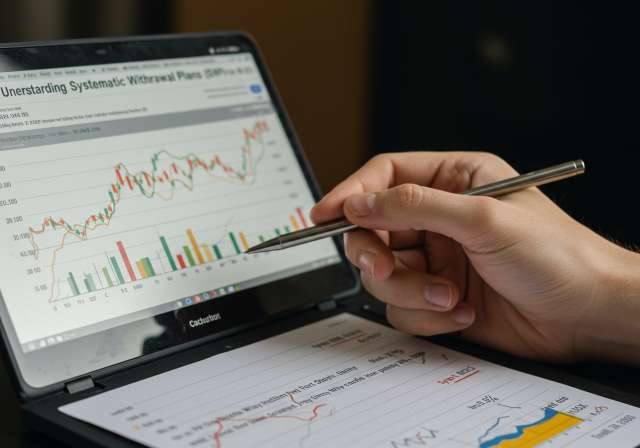
Unlock the secrets of intraday trading with our मिनी ट्रेडिंग गाइड! Learn essential strategies, risk management tips, and tools
Intraday Trading in India: Your Quick-Start Guide
Unlock the secrets of intraday trading with our मिनी ट्रेडिंग गाइड! Learn essential strategies, risk management tips, and tools to navigate the Indian stock market (NSE, BSE) successfully. Start your journey towards informed trading today!
Intraday trading, also known as day trading, involves buying and selling stocks within the same trading day. The objective is to profit from small price movements that occur throughout the day. Unlike long-term investing, intraday traders don’t hold positions overnight, thereby avoiding overnight risk. In the Indian context, the trading hours on the NSE (National Stock Exchange) and BSE (Bombay Stock Exchange) are typically from 9:15 AM to 3:30 PM, providing a limited window of opportunity for traders to execute their strategies.
The first step is opening a Demat (Dematerialization) and trading account with a registered brokerage firm. Several brokers in India offer online trading platforms with features specifically designed for intraday trading. Consider factors such as brokerage charges, platform usability, research reports, and customer support when selecting a broker. Reputable brokers are registered with SEBI (Securities and Exchange Board of India), the regulatory body for the Indian securities market.
While fundamental analysis focuses on the intrinsic value of a company, intraday traders primarily use technical analysis. This involves studying price charts, identifying trends, and using technical indicators to predict short-term price movements. Common technical indicators include:
Risk management is arguably the most important aspect of intraday trading. Here’s how to manage risk effectively:
A well-defined trading strategy is essential for consistent success in intraday trading. Your strategy should outline:
Breakout trading involves identifying stocks that are breaking out of a trading range or resistance level. When a stock’s price breaks above a resistance level, it can indicate strong buying pressure and potential for further upward movement. Conversely, a breakdown below a support level can signal selling pressure and potential for further decline.
Trend following involves identifying and trading in the direction of the prevailing trend. Traders use moving averages and other trend indicators to identify trends and enter trades when the price pulls back to a support level in an uptrend or bounces back to a resistance level in a downtrend.
Scalping is a high-frequency trading strategy that involves making numerous small profits from tiny price movements. Scalpers typically hold positions for a very short period, often just a few seconds or minutes. This strategy requires quick reflexes, discipline, and access to a high-speed trading platform.
Gap trading involves identifying stocks that have gapped up or down at the opening of the trading day. Gaps occur when the opening price of a stock is significantly higher or lower than the previous day’s closing price. Gap traders look for opportunities to profit from the continuation or filling of these gaps. The stock market’s sensitivity to global cues often causes these gap-up or gap-down openings.
Most brokers provide their own proprietary trading platforms. These platforms offer real-time market data, charting tools, order execution capabilities, and risk management features. Some popular trading platforms in India include Zerodha Kite, Upstox Pro, and Angel Broking’s Angel One.
Advanced charting software can provide more in-depth technical analysis tools and features. Some popular charting software options include TradingView and MetaTrader 4.
Staying informed about market news and events is crucial for intraday trading. Monitor financial news websites, business channels, and social media for relevant information. Reliable sources include the Economic Times, Business Standard, and CNBC TV18.
Stock screeners can help you identify potential trading opportunities based on specific criteria, such as price movement, volume, and technical indicators. Most brokerage platforms offer built-in screeners, or you can use third-party screeners like those offered by Moneycontrol or Tickertape.
Profits from intraday trading are treated as business income and are taxed according to your income tax slab. It’s important to maintain accurate records of your trades and consult with a tax advisor to understand the tax implications of your intraday trading activities. Expenses related to your trading activities, such as internet charges and brokerage fees, can be deducted from your trading income.
Intraday trading is inherently riskier than long-term investment options like mutual funds, SIPs, ELSS, PPF, or NPS. While the potential for high returns is appealing, the risk of substantial losses is also significant. It’s crucial to understand your risk tolerance and financial goals before engaging in intraday trading. Consider diversifying your investments across different asset classes to mitigate risk. For example, while some capital can be allocated to intraday trading for speculative opportunities, a larger portion should be dedicated to safer, long-term investments for wealth creation and retirement planning. Many Indian investors utilize mutual funds for long-term goals while dabbling in intraday trading with a smaller portion of their portfolio.
Before venturing into the dynamic world of intraday trading, remember the importance of thorough research, disciplined risk management, and continuous learning. This मिनी ट्रेडिंग गाइड provides a foundational understanding, but ongoing adaptation and refinement are essential for navigating the complexities of the Indian stock market. Happy trading!
Understanding Intraday Trading
Key Features of Intraday Trading
- High Volatility: Intraday trading thrives on volatility. Significant price swings within a day offer potential for profit.
- Leverage: Brokers often provide leverage to intraday traders, allowing them to trade with more capital than they actually possess. While leverage can amplify profits, it also magnifies losses.
- Technical Analysis: Intraday traders rely heavily on technical analysis – studying charts, patterns, and indicators – to identify trading opportunities.
- Quick Decision-Making: The fast-paced nature of intraday trading demands quick decision-making and disciplined execution.
- Risk Management: Managing risk is crucial. Setting stop-loss orders is a non-negotiable aspect of any intraday trading strategy.
Getting Started with Intraday Trading in India
1. Demat and Trading Account
2. Fundamental and Technical Analysis
- Moving Averages: Used to smooth out price data and identify trends.
- Relative Strength Index (RSI): Measures the magnitude of recent price changes to evaluate overbought or oversold conditions.
- Moving Average Convergence Divergence (MACD): A trend-following momentum indicator that shows the relationship between two moving averages of a security’s price.
- Bollinger Bands: Measure the volatility of a stock.
- Volume Analysis: Understanding the trading volume helps confirm price trends. Increased volume during a price rise can indicate strong buying pressure.
3. Risk Management is Key
- Stop-Loss Orders: Always place stop-loss orders to limit potential losses. A stop-loss order automatically sells your stock when it reaches a specified price.
- Position Sizing: Determine the appropriate position size based on your risk tolerance and account size. Avoid risking a large percentage of your capital on a single trade.
- Risk-Reward Ratio: Aim for a favorable risk-reward ratio, ideally at least 1:2. This means that for every rupee you risk, you aim to make at least two rupees in profit.
- Avoid Overtrading: Overtrading can lead to impulsive decisions and increased transaction costs. Stick to your trading plan and avoid chasing every opportunity.
4. Developing a Trading Strategy
- Entry Criteria: The specific conditions that must be met before you enter a trade.
- Exit Criteria: The price levels at which you will take profit or cut your losses.
- Time Frame: The time frame you will use for analysis (e.g., 5-minute, 15-minute, or hourly charts).
- Instruments to Trade: Focus on a limited number of stocks that you understand well.
Popular Intraday Trading Strategies in India
1. Breakout Trading
2. Trend Following
3. Scalping
4. Gap Trading
Tools and Resources for Intraday Traders in India
1. Trading Platforms
2. Charting Software
3. News and Information Sources
4. Screeners
Tax Implications of Intraday Trading in India
Intraday Trading vs. Other Investment Options
Important Considerations and Cautions
- Education and Practice: Intraday trading requires a significant amount of knowledge and practice. Start with paper trading (simulated trading) to test your strategies before risking real money.
- Emotional Discipline: Emotions like fear and greed can cloud your judgment and lead to poor trading decisions. Develop emotional discipline and stick to your trading plan.
- Avoid Herd Mentality: Don’t follow the crowd or rely on tips from unreliable sources. Do your own research and make informed decisions.
- Beware of Scams: Be wary of investment schemes that promise guaranteed high returns. If it sounds too good to be true, it probably is. Always verify the credentials of any investment advisor or broker before entrusting them with your money.
About the Author


